
Saab and Airbus Collaborate on Unmanned Fighter Technology Amid Shifting European Defence Dynamics
December 5, 2025 – Paris
In a significant development highlighting evolving alliances in Europe’s defence industry, Swedish aerospace and defence company Saab and European aerospace giant Airbus have confirmed ongoing discussions to cooperate on unmanned warplane technology. The collaboration, revealed in separate interviews with the CEOs of both companies at a recent European aerospace event, signals rising interest in drone technologies intended to complement existing crewed fighter jets.
Exploring Next-Generation Drone Support for Manned Fighters
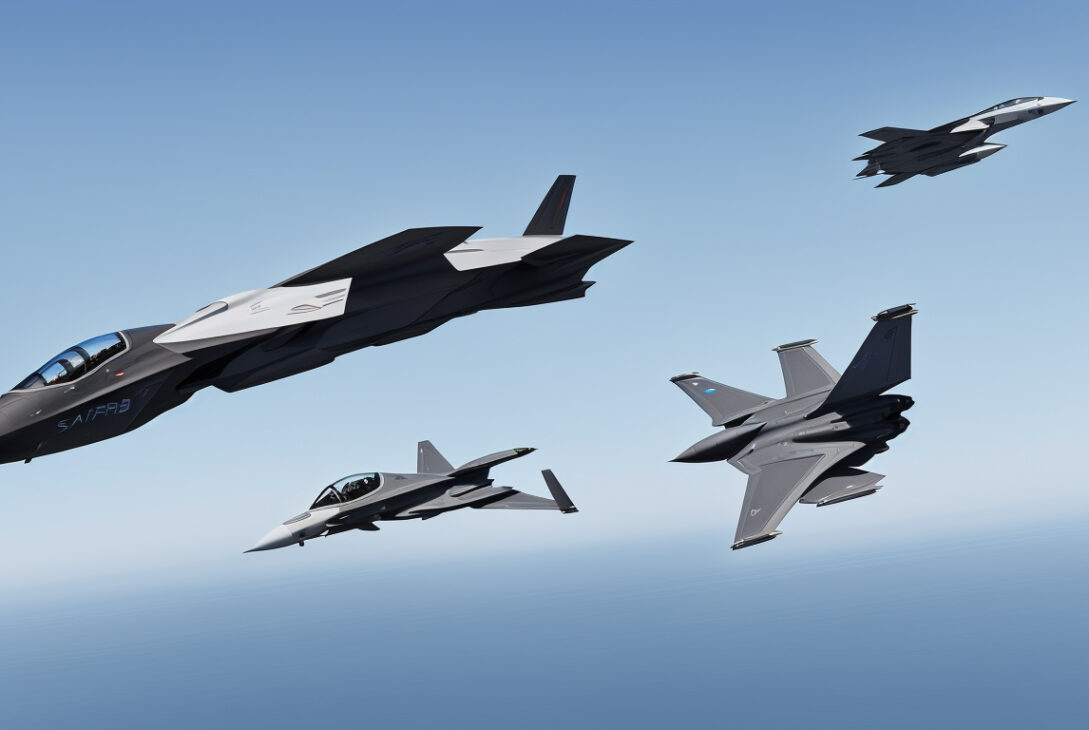
Saab CEO Micael Johansson explained that the cooperation focuses on developing unmanned aircraft systems designed to operate alongside current generation fighters such as the Airbus-backed Eurofighter Typhoon and Saab’s own Gripen E. These “loyal wingman” or collaborative combat aircraft (CCA) concepts provide enhanced operational flexibility and force multiplication for human-piloted warplanes.
Johansson emphasized that Saab’s interest lies in unmanned systems that complement, rather than replace, their legacy fighter platforms. “We have discussed whether we can do something on the unmanned side which complements our legacy fighters,” he noted, adding that Saab is also engaged in talks with other potential partners but has not made any final decisions.
Airbus Confirms Independent Discussions from FCAS Program
Airbus CEO Guillaume Faury confirmed the talks, emphasizing the strength of Airbus and Saab’s existing collaboration in electronics and missile technologies. “We see good perspectives to continue to work with them on unmanned – that’s something that we are discussing with them, which is unrelated to FCAS,” Faury said.
He distanced the current unmanned technology discussions from challenges facing the Future Combat Air System (FCAS) program—a €100 billion joint fighter development project involving France, Germany, and Spain. FCAS has been marred by disagreements over work shares and technology among participating nations and companies.
Context: Europe’s Fractured Fighter Development Landscape
The Saab-Airbus cooperation talks come at a critical time when the future of European air combat capabilities is in flux. Sweden’s Gripen fighters have traditionally been developed independently, while France developed the Rafale and several European nations co-developed the Eurofighter. However, next-generation fighter projects have reshuffled these alignments:
- The FCAS project (also called SCAF in French) unites France, Germany, and Spain in developing a new fighter system.
- The UK, Italy, and Japan are collaborating on the Global Combat Air Programme (GCAP), which remains open to new membership.
- Sweden withdrew from the UK-led Tempest fighter initiative (now part of GCAP) in 2023 and is independently conducting research for a new Gripen successor, with decisions expected around 2028 or 2030. Industry insiders have suggested that if the FCAS program collapses, companies like Saab could emerge as pivotal partners for Airbus in reshaping European air combat strategies.
Saab’s Position: Maintaining Fighter Development Sovereignty
While open to future partnerships, Johansson stressed Saab’s determination to retain its status as an original equipment manufacturer with full fighter development capabilities. “I’m not excluding any sort of partnerships going forward. That could absolutely be a way forward, but with retaining OEM capability on the fighter side: why would we let go of that?” he commented.
Looking Ahead: Unlocking the Potential of Unmanned Wingmen
Both Saab and Airbus have joined industry-wide efforts to advance collaborative combat aircraft, reflecting wider military trends towards integrating autonomous and remote platforms into combat air operations. Airbus showcased a stealthy “Wingman” drone concept at the Berlin Airshow in 2024, underscoring its commitment to these next-generation technologies.
Recently, Saab received renewed orders from the Swedish government to study manned and unmanned warplane designs, further strengthening its research in this domain.
With ministerial talks on FCAS scheduled soon and increasing dialogue between aerospace leaders, the Saab-Airbus cooperation could serve as a catalyst for redefining European air power development, potentially bridging gaps between fractured projects and shaping defence industry alliances well into the future.
Reporting by Tim Hepher; Editing by Jane Merriman