

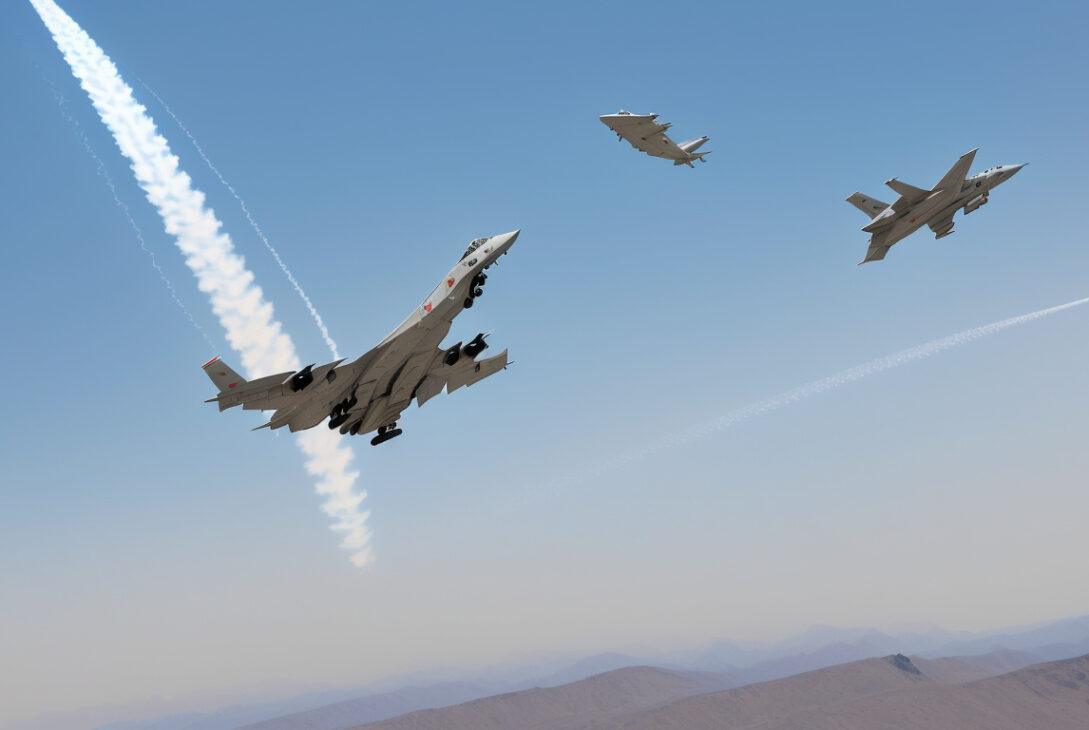
India Expands Airpower Through Israeli Aircraft and Defense Technology Deals
By Haley Fuller | Published February 8, 2026
India is significantly enhancing its airpower capabilities through expanded defense partnerships with Israel, acquiring advanced aircraft, sensors, and precision weapons that play central roles in the country’s ongoing modernization efforts. Over the past two years, New Delhi has moved aggressively to integrate Israeli technology into its air force—not simply through arms purchases but via enduring industrial collaborations focused on joint production and technology transfer.
This strategic evolution reflects a broader shift toward self-reliance in defense manufacturing and modernization, supported by official government-to-government memoranda and bilateral cooperation agreements. Israeli systems now power Indian fighter jets, extend their operational reach with modern tanker aircraft, and improve strike accuracy by equipping the Indian Air Force with state-of-the-art precision munitions.
Aerial Tanker Aircraft to Enhance Range and Endurance
One of the most visible advancements involves India’s efforts to replace its aging fleet of Russian-built Il-78 aerial refueling tankers. To boost operational range and endurance for frontline fighters such as the Dassault Rafale and Sukhoi Su-30MKI, India is procuring converted Boeing 767 aircraft configured as Multi-Mission Tanker Transport (MMTT) planes.
The conversion work is expected to be carried out by Israel Aerospace Industries (IAI), an expert in military tanker conversions, under a deal valued at approximately $900 million covering six aircraft. These tankers will enable Indian fighters to fly longer missions and operate at greater distances from home bases—capabilities critical for extended air campaigns and regional security.
Importantly, IAI has committed to fulfilling India’s “Make in India” policy by conducting portions of the conversion domestically, thereby promoting local industry participation and knowledge transfer in line with New Delhi’s broader defense manufacturing self-reliance goals.
Israeli Technology Embedded Within Indian Fighter Jets
Beyond aircraft acquisitions, Israeli defense technologies have become integral components of India’s indigenous fighter aircraft. The HAL Tejas light combat aircraft, for instance, incorporates advanced Israeli avionics including radar and electronic warfare suites that enhance detection, targeting, and survivability.
Newer variants of the Tejas are equipped with Israeli-built active electronically scanned array (AESA) radars and sophisticated electronic warfare systems. These upgrades allow longer detection ranges and improved resistance to enemy air defenses, closing capability gaps between the Tejas and Western-made fighters without requiring India to develop every complex subsystem domestically.
This inclusion of Israeli systems reflects a broader trend toward embedding Israeli sensors, radars, and avionics across multiple Indian military platforms, signaling a move beyond one-off purchases into deeper technological collaboration and co-development.
Precision-Guided Munitions and Expanding Procurement Scope
India is also enhancing its air-to-ground strike capabilities by expanding its acquisition of Israeli precision-guided munitions. Notably, large orders for Rafael Advanced Defense Systems’ SPICE kits have been approved. These kits convert conventional bombs into precision weapons equipped with satellite and electro-optical guidance, enabling pilots to engage targets accurately from long distances while reducing exposure to hostile air defenses.
The integration of SPICE-guided munitions bolsters India’s stand-off strike options, providing tactical advantages for operations that require precision and risk mitigation. This move aligns with India’s strategy to supplement unguided bomb stocks with more effective precision weapons and underscores Rafael’s growing role in the Indian arsenal.
From Imports to Collaborative Indian Manufacturing
What sets the current phase apart is India’s insistence on domestic co-production. Recognizing the strategic value of homegrown defense manufacturing, New Delhi requires foreign partners to establish joint ventures and technology-sharing arrangements.
In response, Israeli firms have initiated local partnerships, such as the recently announced collaboration between Israel Aerospace Industries and Indian company DCX Systems focused on aerospace electronics and radar technologies. Such ventures enable knowledge transfer, indigenous component production, and alignment with India’s “Atmanirbhar Bharat” (self-reliant India) policy aimed at reducing dependency on imports.
Strategic Importance Amidst Regional Challenges
This growing India-Israel partnership comes at a critical time as India continues to manage complex security challenges with both Pakistan and China. Enhanced tanker aircraft extend the reach of Indian air operations, advanced Israeli radars improve situational awareness, and precision munitions increase strike effectiveness.
Rather than a single transformative acquisition, the relationship follows a deliberate pattern of integrating Israeli technology organically into Indian platforms, fundamentally reshaping how Indian aircraft operate and sustain missions. This comprehensive modernization strategy strengthens India’s air force capabilities and underscores the evolving nature of international defense collaboration in South Asia.
About the Author
Haley Fuller is a contributing writer for Military.com and a former U.S. Marine Corps captain. Her work focuses on defense policy, veterans’ affairs, and the intersection of military service and law. She draws on over a decade of experience across military, law enforcement, and legal research to illuminate issues impacting service members and veterans.
© 2026 Military.com. All rights reserved. Reproduction or redistribution of this article without permission is prohibited.