
Japan Science and Technology Agency Develops NVIDIA-Powered Moonshot Robot to Revolutionize Elderly Care
January 8, 2026 – by Zoe Kessler
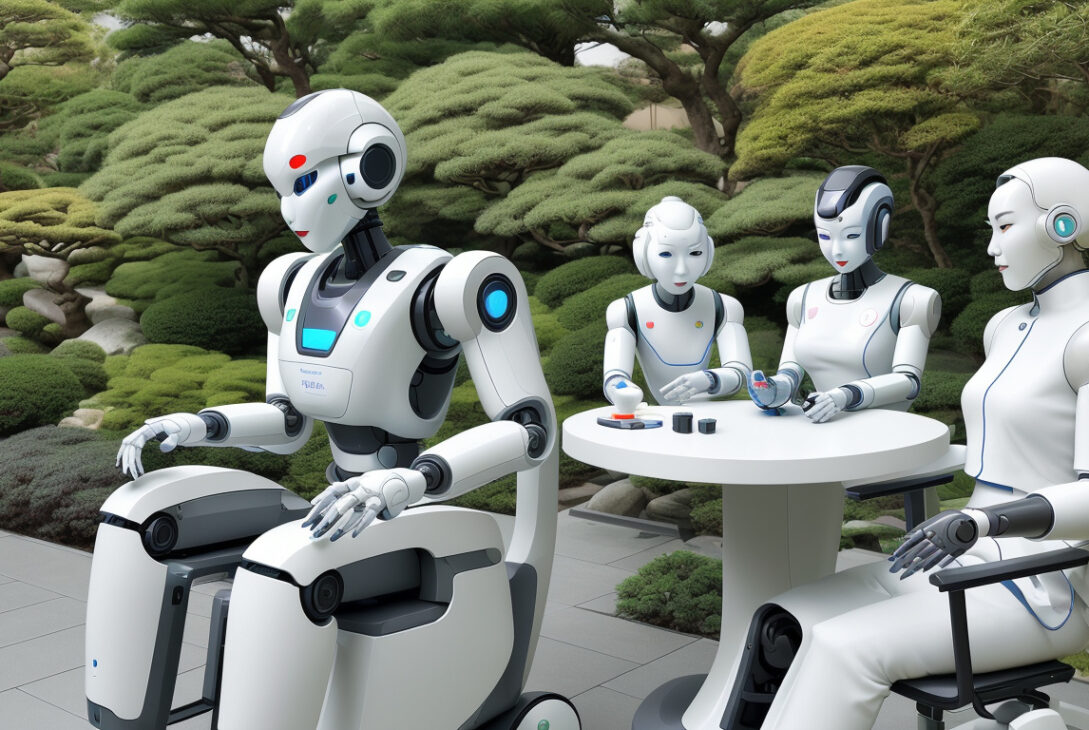
The Japan Science and Technology Agency (JST), in collaboration with NVIDIA, is pioneering a groundbreaking effort to transform elderly care through robotics. As part of the ambitious Moonshot research program, JST is developing humanoid robots powered by cutting-edge NVIDIA AI and robotics technologies to assist with caregiving tasks such as cooking, cleaning, repositioning, and hygiene care. This initiative aims to integrate autonomously learning, AI-driven robots into the daily lives of Japanese citizens by 2050, addressing a pressing social issue amid Japan’s rapidly aging population.
The Moonshot Project: A Vision for 2050
The Moonshot program, funded by JST and involving researchers from universities across Japan, consists of 10 bold technology goals. These targets range from ultra-early disease detection to sustainable resource management. Goal No. 3 focuses specifically on utilizing robotics to improve senior care. Given Japan’s demographic challenges, innovations like these are crucial to easing the strain on a shrinking caregiving workforce while improving quality of life for elderly individuals.
NVIDIA’s Role: Powering the AI-Driven Robot for Embrace and Care (AIREC)
Central to this initiative is the AI-Driven Robot for Embrace and Care—known as AIREC. This family of robots incorporates NVIDIA technology at every level, from AI computation to simulation and training environments. For instance, the Dry-AIREC, a larger and highly mobile model, includes two NVIDIA GPUs enabling robust AI processing. Meanwhile, AIREC-Basic, primarily employed for data collection to develop foundational motion models, utilizes three NVIDIA Jetson Orin NX modules to perform edge AI tasks efficiently.
Furthermore, NVIDIA Isaac Sim, an open-source robotic simulation framework, has been instrumental in training AIREC robots. It helps them perform delicate caregiving tasks, such as estimating the forces required when interacting with objects or people—a vital component for ensuring safe and gentle assistance.
Professor Tetsuya Ogata, director of the Institute for AI and Robotics at Waseda University, emphasized the impactful role of recent AI advancements: “Five years ago, before generative AI, few people believed that this application was possible. Now, the atmosphere surrounding this technology has changed, so we can seriously think about this kind of application.”
Expanding Caregiving Capabilities: From Repositioning to Personal Hygiene
The development of AIREC robots is not limited to a few tasks; it encompasses a wide range of caregiving activities crucial for elderly individuals’ comfort and health. Research efforts are currently focused on supporting actions such as diaper changes, bathing assistance, and meal preparation to allow human caregivers to dedicate more attention to improving the overall wellbeing of those they serve.
Misa Matsumura, a bioengineering master’s student at the University of Tokyo, has been leading investigations into automating the complex task of repositioning patients—a critical activity to prevent bedsores and facilitate hygiene care. Her team utilizes NVIDIA RTX GPU-powered laptops to develop 3D posture estimation, trajectory calculations, and force estimation methods that allow Dry-AIREC to manipulate patients safely and effectively.
Using data gathered from Dry-AIREC’s fisheye and depth cameras, Matsumura’s team analyzes how skilled caregivers move and support patients, translating this into precise robotic motions. The robot adjusts the applied force to ensure comfort, neither too much nor too little, by predicting the necessary pressure on shoulders and knees. Initially tested on mannequins, the research has progressed to human trials, with ongoing efforts to refine these capabilities.
Personal Commitment Driving Innovation
Many involved researchers express a deep personal connection to the project. Professor Etsuko Kobayashi, a bioengineering professor at the University of Tokyo and Matsumura’s advisor, shared her motivation: “Although my study focus is on medical robotics, I decided to join this project because my mother is growing older, and that experience has given me an appreciation for the importance of personal care. I found that my experience in medical robotics can be meaningfully extended to care robotics, contributing to the development of safe and reliable robotic systems for human-centered applications.”
Future Prospects and Upcoming Showcase
The Moonshot team dedicated to Goal No. 3 will present their latest advancements at the 2026 International Symposium on System Integration in January. Their work highlights the promising future of AI-powered robots in addressing societal needs, particularly in eldercare.
For more detailed insight into NVIDIA Isaac Sim and its applications within robotic development, interested readers can explore NVIDIA’s resources.
This initiative represents a significant stride towards addressing demographic challenges through advanced technology, illustrating how AI and robotics can meaningfully support aging populations worldwide.
Categories: Research | Robotics
Tags: GPU, NVIDIA Isaac Sim, NVIDIA Jetson, NVIDIA RTX, Robotics