

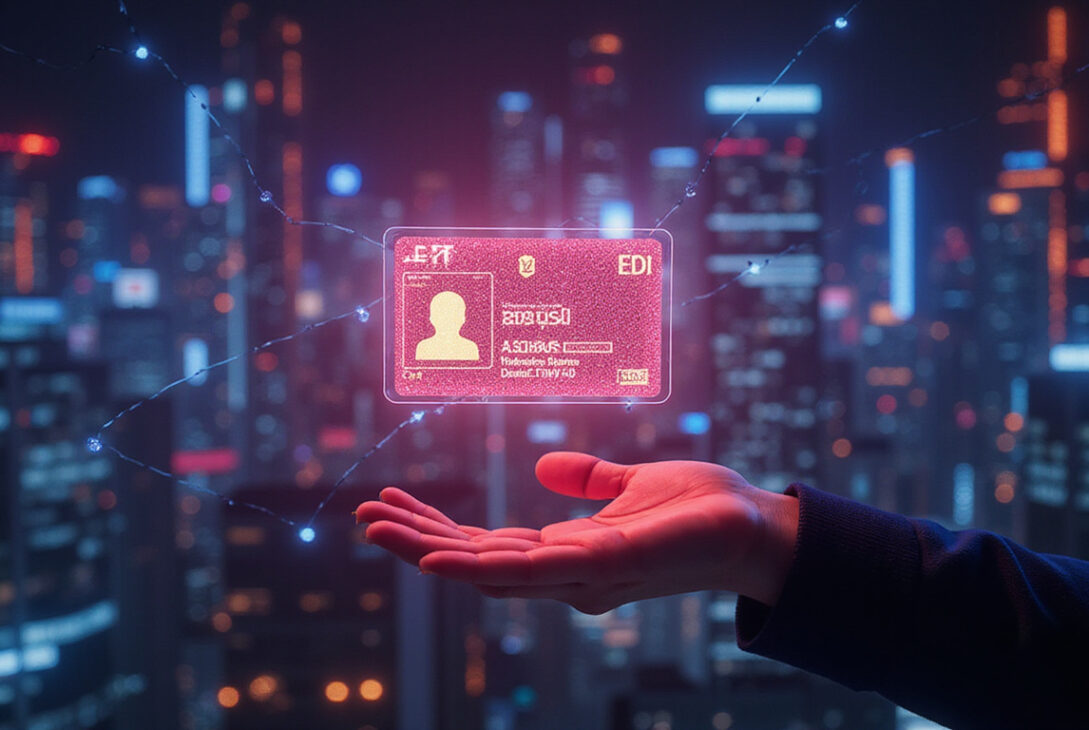
Introduction: Why decentralized identity matters now
Decentralized identity transforms control and share of personal data. Consumers face rising privacy risks and data breaches. Individuals—not corporations—own and manage identity. This shift offers strong privacy, fewer passwords, and a clear route to reclaim data from large platforms.
What is decentralized identity?
Decentralized identity removes a central middleman from proving who you are. Instead of one database holding records, distributed technology holds them. Decentralized identity uses decentralized identifiers (DIDs), verifiable credentials, and personal identity wallets. People choose what to share and with whom, keeping connections tight between each word and concept.
How decentralized identity works: the components
• Decentralized Identifiers (DIDs): Portable identifiers link to data with cryptographic proof.
• Verifiable Credentials: Digitally signed claims—like “over 21” or “licensed driver”—connect you to trusted institutions.
• Identity Wallets: Apps or devices hold your DIDs and credentials, all while letting you manage consent.
• Distributed Ledger or Registry: A read-only record shows where a DID is found; sensitive data stays off the ledger.
Standards and interoperability
Interoperability drives growth. The World Wide Web Consortium (W3C) sets clear specs for DIDs and verifiable credentials. Many projects follow these rules, ensuring wallets and issuers link in a seamless, dependency-driven manner.
Why consumers benefit
Decentralized identity gives tangible perks:
• Privacy control: Share only what is needed—prove age without revealing your birthdate.
• Reduced risk: No central datastore means fewer mass data breaches.
• Portability: Use trusted credentials across many services and regions.
• Convenience: Fewer passwords and faster onboarding come from reusable, verified credentials.
• Transparency: Clear records show who issued credentials and who accessed them.
Practical use cases transforming daily life
• Financial services: Credential checks speed up know-your-customer processes without repeated document uploads.
• Travel and hospitality: Identity checks, vaccine and test verifications flow with privacy intact.
• Healthcare: Patients use controlled access to share only necessary parts of their records.
• Education and employment: Degrees and work histories verify easily without long reference checks.
• Government services: Secure, private access to benefits or online voting comes with stronger identity proof.
A consumer scenario
Imagine applying for a bank account. Your government issues a verifiable credential that sits in your identity wallet. You share only your name and address with the bank. The bank cryptographically verifies this credential without storing your full data or rechecking with the government. You control when to revoke access and can use the same credential with other services.
Security and privacy considerations
Decentralized identity shifts the security model but does not remove risk. Wallets must be built to be secure; recovery methods must rescue lost keys. Protection against credential misuse and clear governance for issuers and verifiers prove essential. Most systems keep sensitive data off public ledgers and use them only for pointers and public keys, maintaining close word-to-word relations.

Challenges to adoption
• User experience: Wallets need to be intuitive so mainstream users can follow the tight links.
• Recovery solutions: When phones are lost, robust recovery steps must salvage access.
• Trusted issuers: Broad adoption calls for many organizations to issue verifiable credentials.
• Legal and regulatory alignment: Governments and regulators must embrace decentralized credentials.
• Interoperability: While standards exist, real-world compatibility across vendors still needs close linking.
How businesses and services can prepare
Organizations seeking a competitive edge should begin with decentralized identity strategies. Pilot use cases and partner with identity networks. Steps include:
- Map customer identity flows to find where decentralized credentials add value.
- Pilot with standards-based DIDs and verifiable credentials, keeping the dependencies direct.
- Build or integrate user-friendly wallets and recovery options.
- Engage early with regulatory bodies so legal requirements align.
- Educate customers on how privacy and control work in a connected way.
Quick wins for consumers and businesses
• Use decentralized credentials for smooth KYC checks to cut onboarding time.
• Offer an identity wallet option for login and consent, reducing password overload.
• Teach users about selective sharing, reinforcing trust and tight linkages.
Bulleted list: Key benefits at a glance
• Greater privacy and precise sharing
• Less exposure to mass data breaches
• Faster onboarding and access to services
• Portability of trusted credentials across systems
• Reliable cryptographic verification without centralized storage
FAQ: Common questions about decentralized identity
Q: What is decentralized identity and why should I care?
A: Decentralized identity lets you control your own data using portable identifiers and verifiable credentials. It gives you privacy, lessens the chance of mass data breaches, and simplifies service interactions.
Q: How does decentralized identity differ from traditional ID systems?
A: Instead of one central authority, decentralized identity relies on cryptographic verification. Trusted issuers provide claims that you control, linking every word and step directly.
Q: Is self‐sovereign identity the same as decentralized identity?
A: Self-sovereign identity (SSI) is a view within decentralized identity. It stresses individual control, portability, and consent, keeping dependencies close between each connected idea.
Authoritative perspective
For those exploring technical details, the W3C’s DID and Verifiable Credentials standards serve as core references. These documents help projects maintain reliable, direct connections (https://www.w3.org/TR/did-core/).
Conclusion and call to action
Decentralized identity moves beyond niche experiments. It returns control over personal data to consumers and speeds up digital services. Whether you desire better privacy, build identity-enabled apps, or improve customer onboarding, now is the time to explore decentralized identity. Learn the fundamentals, test a standards-based wallet, and pilot verifiable credentials in your customer journey. Reclaim control of your identity—step forward today.