

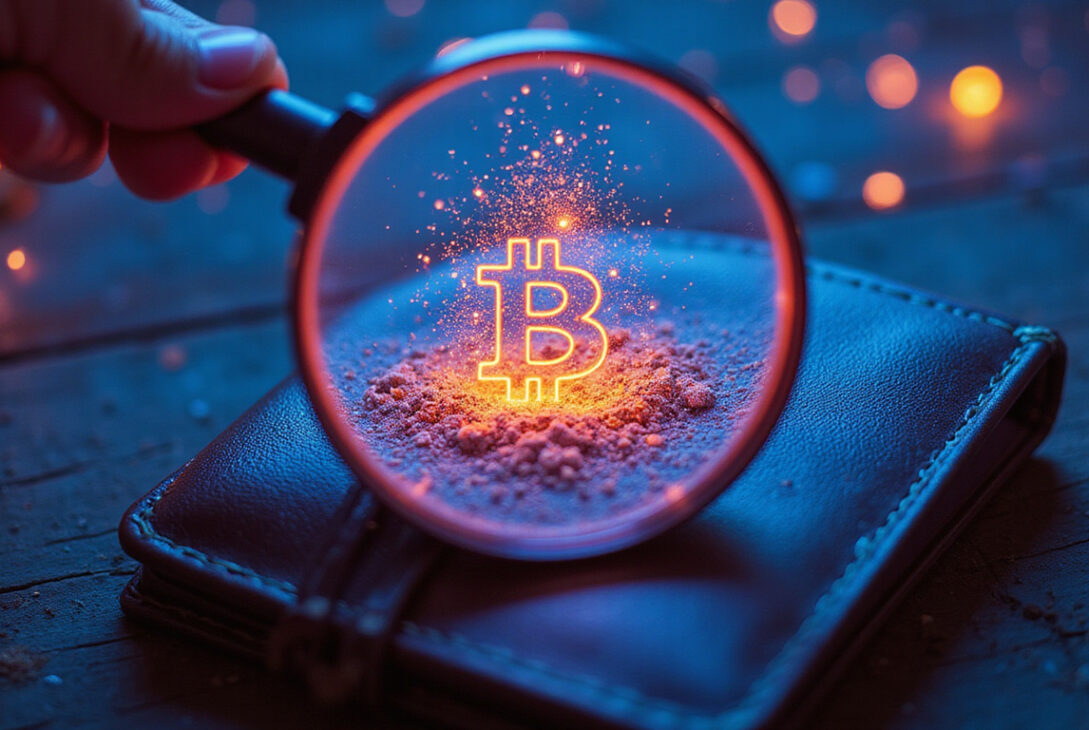
A dusting attack is a crypto threat. It does not steal coins. It invades privacy. It tracks transactions. It links wallet addresses to real identities. You must know its method. You must know how to defend against it. This matters for Bitcoin, Ethereum, and other cryptocurrencies.
This guide explains dusting attacks in plain language. It shows you how to spot them. It gives you clear steps to protect your crypto wallet from tracking.
What Is a Dusting Attack?
A dusting attack happens when an attacker sends a tiny amount of cryptocurrency—“dust”—to many wallet addresses.
• The dust has little value on its own.
• The attacker watches its movement.
• The attacker uses blockchain analysis.
Their goal is to:
– Link many addresses to one user.
– Reveal who owns each wallet.
– Build a profile of your holdings, habits, and contacts.
When you spend the dust in a normal transaction, you mix it with other coins. This act can reveal links between your addresses. Attackers, scammers, or data brokers then can track you across the blockchain.
What Is “Dust” in Crypto?
“Dust” is a tiny, nearly unusable amount of cryptocurrency:
• It is too small to trade or withdraw cost-effectively.
• It sits below the typical network fee.
• It appears as change in complex or automated transactions.
On Bitcoin, dust might be only a few satoshis. It costs less than a penny. Every blockchain has its own threshold. The concept stays the same: these small balances become tracking tools.
How a Dusting Attack Works (Step-by-Step)
A dusting attack runs in clear steps:
-
Target Selection
The attacker makes a list of active wallet addresses.
They take addresses from public donation pages, exchange withdrawals, known DeFi or NFT users, and blockchain scrapes. -
Dust Distribution
The attacker sends a minuscule crypto amount to each address.
It can be:
– 0.0000001 BTC
– 0.00000001 LTC
– Or small Ethereum tokens -
Waiting and Watching
After the dust reaches your wallet, the attacker monitors the blockchain.
If you later send a transaction that:
– Mixes the dust with other UTXOs (in Bitcoin-like systems)
– Moves the dust along with other tokens (in Ethereum-like chains)
the attacker sees which addresses share control. -
Address Clustering and De-Anonymization
The attacker groups addresses into clusters.
They use data from:
– Exchange KYC leaks
– Public profiles or posted addresses
– Off-chain intel from forums or social media
This data may tie clusters to your real identity. -
Exploitation
When a pattern forms, attackers use your data for:
– Spear-phishing or extortion
– Harassment or blackmail
– Surveillance over your transactions and holdings
– Selling behavioral data to other bad actors
The dust itself is not costly. Its power comes from the trackable links it creates.
Why Dusting Attacks Are a Serious Privacy Threat
A dusting attack leaves your coins intact but strips away your privacy. It matters because attackers can:
1. Lose Your Transaction Privacy
They link your addresses. They then:
– Estimate your total holdings.
– Map who pays you and whom you pay.
– Uncover your salary, donations, investments, or spending.
2. Increase the Risk of Targeted Scams
If attackers see you hold high-value coins, you face:
– Spear-phishing attacks.
– Impersonation or social engineering.
– Extortion based on visible holdings.
3. Create Real-World Harm
In some cases, showing that you are a major crypto holder may bring:
– Personal safety risks.
– Legal or tax troubles.
– Business or reputational harm.
Research from firms like Chainalysis shows that address clustering and transaction graph analysis help attackers trace funds on public chains (source: Chainalysis).
How to Recognize a Dusting Attack
Dusting often goes unseen. You can suspect an attack if you notice:
• Tiny, unexpected deposits
A very small crypto amount arrives from an unknown address.
• No clear explanation
The sender does not match any exchange, friend, or known contract.
• Small amounts to many users
Others using the same wallet may report similar deposits.
• Odd token spam
On Ethereum or BNB Chain, strange tokens may appear with trap links.
They work like dusting to track and scam.
If you see a strange dust deposit, treat it as suspicious—even if the token appears harmless.
How to Protect Your Wallet From a Dusting Attack
You cannot stop anyone from sending funds on a public blockchain. However, you can limit their insight. Here are practical defenses:
1. Do Not Spend or Move the Dust
On UTXO-based chains (like Bitcoin or Litecoin):
• Do not combine dust with valuable coins in a single transaction.
• If possible, mark the dust as “do not spend” or unselect that input.
On account-based chains (like Ethereum or Solana):
• Treat unknown, tiny tokens as toxic.
• Do not swap, transfer, or interact with them via smart contracts unless you are sure.
Interacting less with dust means you reveal less.
2. Use Wallet Features That Block or Hide Dust
Modern wallets offer privacy features. Look for:
• UTXO control / coin control
Choose which inputs to use when sending coins.
• Ignore or hide small balances
Some wallets hide dust from the display.
• Suspicious token filters
Some wallets flag or hide scam tokens on Ethereum-like chains.
Check your wallet’s settings to use these options.

3. Separate Wallets for Different Purposes
Use different wallets to lessen dust impacts:
• Use one wallet for public receiving (for donation addresses or public profiles).
• Use another wallet for savings or long-term holdings that you never share publicly.
• Consider a fresh wallet for each major activity: trading, DeFi, NFTs, or income.
If your public wallet gets dusted, your private wallet remains isolated.
4. Leverage Privacy Tools (Where Legal and Appropriate)
Depending on your jurisdiction, you may use privacy tools:
• Use coin control and change address management on UTXO chains.
• Use CoinJoin or collaborative transaction tools for Bitcoin.
• Use privacy-preserving wallets or mixers where allowed.
• Use Layer-2 solutions or sidechains that reduce mainnet exposure.
Always study the legal environment in your area before using these tools.
5. Monitor Your Wallet Activity
Tracking your transactions can reveal dusting attacks early:
• Check your transaction history often, especially after public exposure.
• Use blockchain explorers like blockchair, mempool.space, or Etherscan.
• Set up alerts from your wallet, exchange, or third-party tools.
If you see unexplained tiny deposits, act with caution.
Best Practices to Stay Ahead of Dusting Attacks
Adopt these habits to lower your risk:
• Keep long-term holdings in wallets that you never share publicly.
• Turn on coin control / input selection and avoid spending suspicious dust.
• Treat unknown micro-deposits and airdropped tokens as hostile by default.
• Separate public-facing and private wallets.
• Stay updated on privacy features in your wallets and on your networks.
Using these habits turns dusting attacks into mostly harmless noise.
FAQ: Dusting Attacks and Crypto Wallet Privacy
1. What is a dusting attack in cryptocurrency?
A dusting attack sends very small crypto amounts (dust) to many wallets. The attacker watches later moves and uses analytics to link addresses to one user. This action can weaken privacy and connect your wallets with your real identity.
2. How do I know if my wallet has been hit by a crypto dust attack?
You might see tiny, unexpected deposits from unknown addresses. If many users share these small deposits, the risk increases.
3. What’s the best way to prevent dusting attack tracking on my wallet?
Avoid spending or moving the dust. Use coin control or UTXO management to exclude it from transactions. Separate public and private wallets. Use wallets that support dust filtering, and review your transaction history frequently.
Protect Your Crypto Privacy Starting Today
A dusting attack exploits a core truth: every blockchain transaction is public and permanent. Public does not mean safe. When you understand how dusting attacks work and take clear precautions—such as not spending dust, using coin control, and separating your wallets—you reduce the amount of information that can be gathered about you.
Do not wait until your addresses are clustered and your holdings mapped. Check your wallets now, adjust your privacy settings, and build stronger transaction habits. Act early. Act clearly. This makes it much harder for attackers to track you. Your crypto and your identity deserve this protection.