

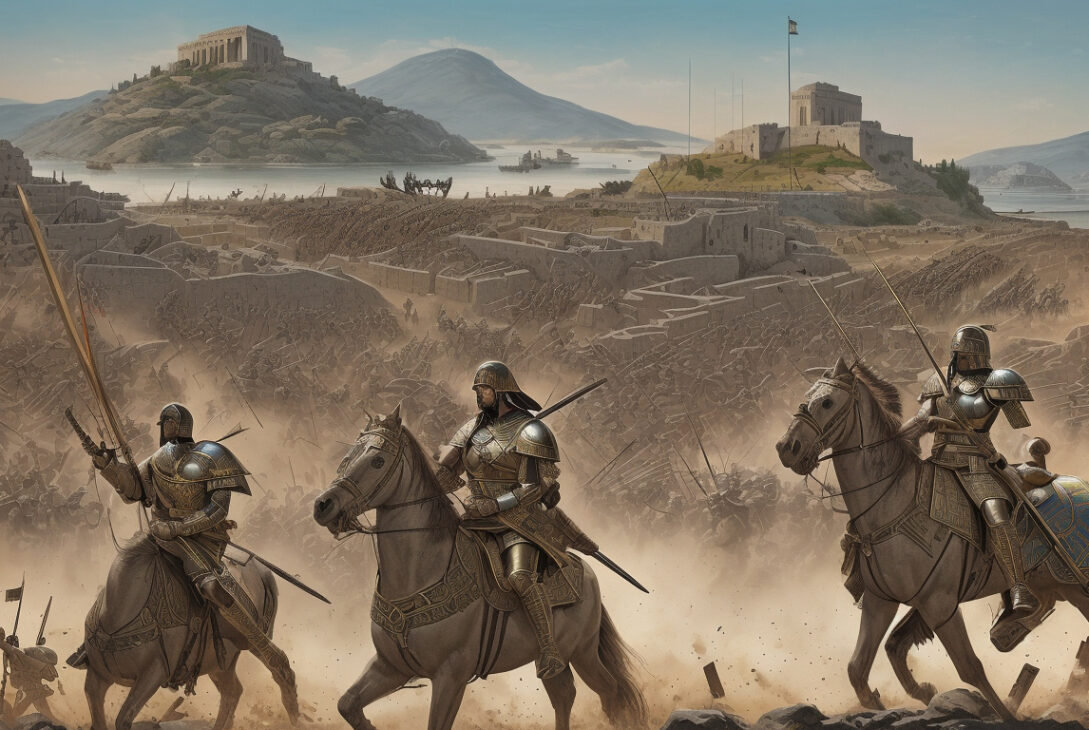
What Thucydides Really Thought About Technology and War
An In-Depth Analysis by Bret C. Devereaux
January 8, 2026 | Cogs of War Commentary
In an exclusive interview featured in Cogs of War, ancient military historian Bret C. Devereaux sheds light on the enduring insights of Thucydides, one of the earliest chroniclers of how technology influences warfare and statecraft. As modern strategists grapple with rapid technical advancements amid ongoing conflicts such as the Russo-Ukrainian War, Thucydides’ observations offer valuable lessons on the interplay between technology, human agency, and the evolving nature of war.
Thucydides: Pioneer of Cause-and-Effect in History
Thucydides is widely recognized as a foundational figure in the discipline of history, notable for his methodical approach to explaining events through causal analysis rather than attributing outcomes to divine intervention or myth. This rational inquiry aimed to understand the forces shaping conflict and power dynamics, but where does technology factor into his historical creativity? Did Thucydides consider technological progress as a key driver of events, or merely a backdrop to political and moral struggles?
Devereaux notes that traditional interpretations lean heavily on the idea that the Peloponnesian War, which Thucydides documents in detail, marked the end of a long-established and relatively static Greek military system. This older paradigm, dominating Greek warfare from the 700s to mid-400s BCE, revolved around hoplite infantry clashes—heavy infantry formations engaged in decisive battles with minimal emphasis on siegecraft or tactical stratagems.
In this conventional view, technological and tactical innovations that appear in Thucydides signal a nascent shift toward more complex and ruthless warfare styles that culminate in later fourth-century developments such as catapults and combined-arms coordination.
Challenging Traditional Narratives: Evolving Views on Hoplite Warfare
However, Devereaux highlights that recent scholarly debates complicate this narrative. Historians including Peter Krentz, Hans van Wees, Fernando Echeverría, and Roel Konijnendijk argue the “old style” of hoplite warfare depicted by Thucydides was itself a relatively recent and unstable innovation, emerging gradually over centuries rather than being a static military tradition.
According to these scholars, Greek military formations and tactics evolved continuously from the eighth century BCE through the Persian Wars (circa 490–479 BCE). Therefore, many tactical features found in Thucydides should not be read as brand-new inventions but rather as continuations or revivals of older practices. If this interpretation holds, the Peloponnesian War represents an acceleration of ongoing change rather than a revolutionary military transformation. Still, the full flowering of these tactical and technological innovations only occurs decades after Thucydides’ lifetime.
Technology Versus the Human Element in the Peloponnesian War
Did Thucydides recognize the era of unprecedented military transformation he was witnessing? Devereaux suggests that while Thucydides perceived the war as groundbreaking in scale and ruthlessness, his focus was less on new weapons or technologies and more on human agency and the expanding brutality of conflict.
Thucydides famously opens his history by labeling the Peloponnesian War “the greatest shift for the Greeks and some part of the barbarians,” underscoring the catastrophic impacts of battles like the Spartan surrender at Pylos or Athens’ disastrous Sicilian expedition.
Nevertheless, the technological tools of warfare—such as weapons, armor, and ships—remained largely constant. For example, the triremes central to naval warfare had existed for decades by the war’s start, and only occasional experiments, like the use of bellows to ignite Athenian forts or reinforced bows on Syracusan ships, hint at technological innovation. Such instances were isolated and did not immediately alter the course of warfare.
In contrast, shifts in the “human element”—including larger armies, complex tactics, frequent sieges, and escalating violence leading to city destructions—are prominent throughout Thucydides’ narrative. The war’s changing character reflected evolving strategies and political ambitions rather than advancements in military hardware.
Greek Siegecraft: Limited Technology, Expanding Strategic Ambitions
Devereaux points out that Greek siege warfare during this period lagged behind that of Near Eastern powers like the Assyrians, who had already mastered advanced siege technologies such as towers, covered battering rams, and sophisticated field engineering two centuries earlier.
In Thucydides’ Greece, siege techniques mainly involved encircling cities with walls (circumvallation) and defenders constructing counter-walls to resist. More complex methods generally failed, reflecting technological limitations. Before the Peloponnesian War, sieges were relatively rare because Greek city-states—led by semi-professional or militia armies—lacked the resources to sustain prolonged campaigns.
However, as the Peloponnesian War intensified, Greek states increasingly committed to long sieges with absolute strategic goals, exemplified by the multi-year sieges of Plataea and Syracuse. While these efforts represented a shift in scale and persistence, the underlying siege technologies remained largely unchanged until the fourth century BCE.
Technology as a Vessel for Human Emotions and Morale
Intriguingly, Thucydides sometimes treats weapons, equipment, and fortifications almost like characters within his history, imbuing them with symbolic significance. The walls at Syracuse, the Athenian triremes, and the siegeworks of Plataea carry emotional weight, representing not just material technology but the will, morale, and political determination of the people and states involved.
Devereaux observes that Thucydides often dwells on material aspects of war to reveal human motivations and psychological states rather than to highlight purely technological breakthroughs. The drawn-out blockade of Plataea, for example, demonstrated the interplay of human endurance, strategic patience, and political stakes rather than any notable innovation in military technology.
Conclusion: Thucydides’ Enduring Relevance
Bret Devereaux’s analysis reveals that while Thucydides documented a moment of significant military and political transformation, his focus was on the human and strategic dimensions of war rather than technological advancement per se. The Peloponnesian War’s legacy lies in how it expanded the scale of conflict, eroded traditional moral constraints, and set the stage for future innovations that would alter warfare in subsequent centuries.
For today’s strategic thinkers and defense professionals, understanding Thucydides’ nuanced perspective offers a reminder that technology alone does not drive the course of wars—human decisions, ambitions, and adaptations remain central. As the modern world faces rapid technological change amid geopolitical tensions, the lessons from this ancient historian continue to resonate.
This article is part of the “Cogs of War” series on War on the Rocks, providing expert analysis to policymakers, military leaders, and strategic thinkers worldwide.
Become a Member to access in-depth content trusted by insiders in national security.