

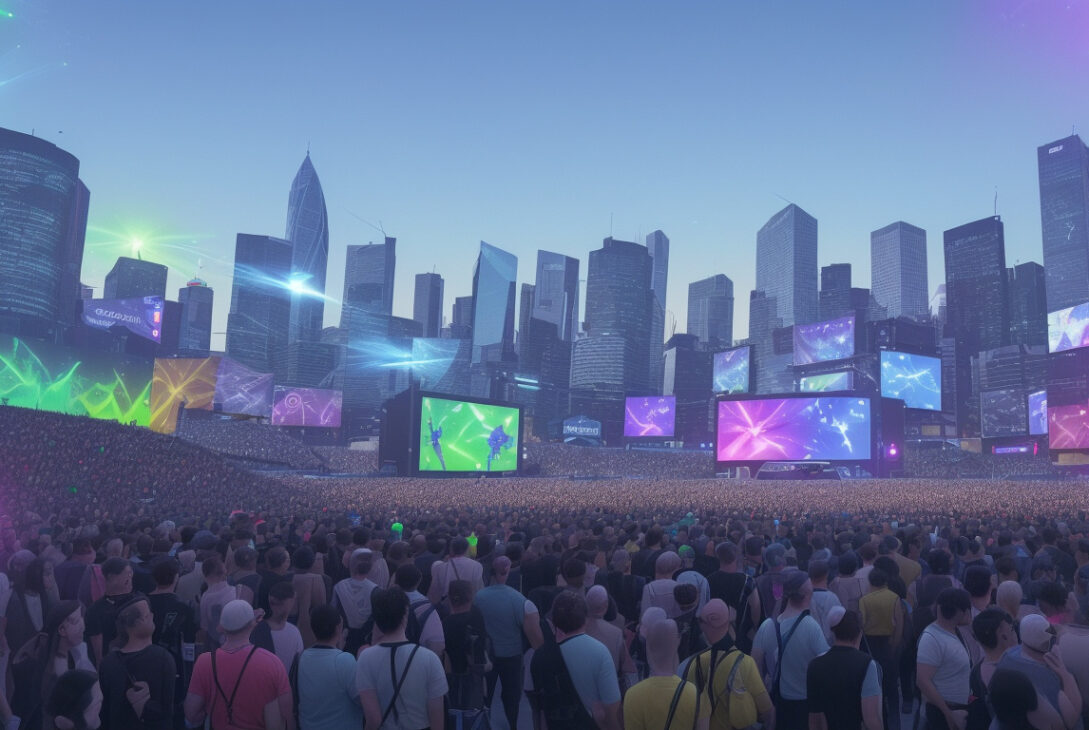
Israeli Start-Up dotSAGA Revolutionizes Safety and Security Technology for Public Events
By Joanie Margulies | January 8, 2026
In an age where smartphones and advanced technology dominate daily life, it might seem that public safety at mass gatherings has also kept pace. Yet, despite improvements in personal tech, the systems ensuring safety at crowded events often remain stuck in the past. Israeli start-up dotSAGA is set to change that, pioneering a new approach that could redefine how security personnel respond to emergencies in large public venues.
The Problem: Outdated Safety Systems in a Tech-Advanced World
Mass gatherings—be they concerts, festivals, sports events, or tourist hotspots—now involve complex security layers including private personnel, medical teams, and extensive emergency protocols. Surveillance cameras monitor crowds continuously, and nearly everyone carries smartphones arguably more powerful than the computers that powered historic space missions.
Yet when it comes to communication and situational awareness, traditional safety systems are frequently inadequate. Walkie-talkies remain the primary tool for security teams, and cellular networks often buckle under the strain of heavy crowd usage. Command centers frequently operate with delayed or incomplete information, leaving response teams reactive rather than proactive.
This disconnect became painfully clear to dotSAGA’s CEO and co-founder, Noam Goldman, during an event he helped organize in Jerusalem several years ago. Goldman recounts receiving a distressing message the morning after the event: an attendee reported sexual assault—but this critical alert had never reached security personnel during the incident.
“I was responsible for my guests’ safety,” Goldman told The Jerusalem Post, “but I had zero indication that anything had happened in real time.”
Such experiences spotlight the structural blind spots inherent in current safety practices, where fragmented communication between attendees and responders can lead to tragic outcomes.
dotSAGA’s Vision: Real-Time, Reliable, and Mesh-Connected Safety
In response, Goldman teamed up with co-founders Alon Abekasis (Chief Product Officer) and Alon Sadan (Chief Technology Officer) to develop a system designed to bridge this communication gap. Rather than focusing on consumer apps—which require cellular networks and user interaction—the team created a dedicated communications infrastructure that functions independently of conventional networks.
At the heart of dotSAGA’s technology is a small, screenless wearable device equipped with a single button. This device operates as a node within a self-forming mesh network, allowing alerts and critical location data to hop between devices directly until they reach a command center—even if no cellular, Wi-Fi, or satellite connection exists.
“In emergencies, people freeze,” Goldman explained. “One button is everything when someone freezes.”
Beyond individual distress signals, dotSAGA’s platform grants command centers continuous situational awareness by monitoring crowd movement and density in real time, detecting anomalies such as sudden stops or panic indicators. This can be vital in preventing deadly chaos, as seen in past tragedies.
Learning From Tragedy: The Need for Immediate Visibility
Goldman particularly cited the 2021 Astroworld festival tragedy in Houston, where a surge in the crowd resulted in 10 fatalities. The disaster was exacerbated by slow communications; warnings from attendees and medical personnel failed to reach decision-makers promptly, resulting in delayed evacuation and emergency response.
“That delay is the difference between life and death,” Goldman emphasized. “Missing the golden hour increases the chance of death by three and a half times.”
Similarly, the October 2023 Hamas attack on the Nova music festival in Israel underscored the dangers of blind spots in event safety. Prior to the attack, Nova’s organizers had inquired about dotSAGA’s system, but it wasn’t yet operational. During the crisis, security forces were forced to rely on manually shared WhatsApp locations to coordinate evacuations—a process far from ideal in fast-moving, chaotic situations.
“You can’t stop a thousand terrorists,” said Goldman, “but you can stop being blind.”
Practical Applications and Pilot Programs
dotSAGA has since piloted its technology in various civilian settings — including ski resorts, outdoor camps, and large venues with minimal cellular coverage. At a ski camp in Italy, for example, the system enabled counselors to monitor groups’ real-time locations across slopes, receiving alerts if someone stopped moving or strayed from designated areas.
“One kid shouted from the back, ‘Don’t worry, we have dotSAGA,’” recalled Goldman with a smile. “That was product–market fit for me.”
Feedback from pilots highlights shorter response times and increased confidence among staff and participants, especially in environments where weather or terrain complicates rescue efforts.
Expanding Amid Adversity and Growing Global Demand
dotSAGA’s founders, all veterans of elite IDF intelligence units, have navigated the startup’s development even while fulfilling military reserve duties during a period of heightened national security challenges since October 2023. Despite these constraints, the company has expanded pilot programs across Europe and is engaging with international operators in tourism, recreation, and venue management sectors. Industry experts recognize the growing need for off-grid safety solutions, fueled by increasing mass gatherings, climate disruptions, and persistent security threats worldwide.
Goldman stresses that dotSAGA is not merely a desirable product but “critical infrastructure” for modern events. With mass gatherings resuming globally and public spaces remaining vulnerable to accidents or violence, reliable real-time information systems independent of fragile networks are becoming essential.
“We realized we’re not building a nice-to-have product,” Goldman said. “This is critical infrastructure.”
Looking Ahead: A New Standard for Safety Technology
dotSAGA envisions its technology integrated into festival wristbands and other event infrastructure, making advanced safety and coordination seamless and accessible. The challenge now lies not in whether to evolve safety technology, but in how swiftly event organizers and institutions will adopt these new standards.
“In a world of advanced technology,” Goldman concluded, “there’s no reason safety should still operate blind.”
As dotSAGA and similar innovators push boundaries, the future of public event safety looks poised for a transformation—one where real-time awareness and connectedness could save lives and prevent tragedy.