

China Reproduces ASML Lithography Technology, Advances Toward Domestic Production of Advanced Semiconductor Chips
December 21, 2025 – Militarnyi
In a significant technological breakthrough, Chinese scientists have successfully developed a prototype lithography machine capable of producing advanced semiconductor chips—technology central to artificial intelligence, smartphones, and modern weapons systems. This development marks a substantial step toward China’s goal of achieving self-sufficiency in semiconductor manufacturing, a domain long dominated by Western countries.
Reverse Engineering ASML’s EUV Lithography Machines
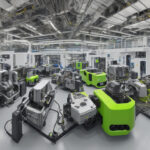
According to a Reuters report citing multiple sources, the prototype was completed in early 2025 and is currently undergoing testing. The machine, which occupies nearly an entire production workshop, has been built by a team largely composed of former engineers from ASML, the Dutch semiconductor giant known for its extreme ultraviolet (EUV) lithography systems. These engineers reverse-engineered ASML’s complex technology to replicate the machine’s capabilities.
ASML’s EUV machines are considered among the most advanced tools for chip fabrication globally, using extreme ultraviolet light with wavelengths thousands of times thinner than a human hair to etch intricate circuit patterns onto silicon wafers. This process enables the manufacture of smaller, more powerful chips used in cutting-edge technologies, from AI processors to defense applications.
Secrecy and Scale of the Project
The project, reportedly overseen in part by tech giant Huawei, has been shrouded in secrecy. Allegations suggest engineers worked under intense conditions, including sleeping at the facility and operating under fake identifications and aliases. Reports also indicate substantial bonuses paid to incentivize participation.
The prototype’s construction involved dismantling older ASML machines obtained from the secondary market via intermediaries, supplemented with components from companies such as Nikon and Canon. This approach highlights China’s strategic use of reverse engineering combined with scavenged Western technology parts to build its domestic version.
Technological Challenges and Timelines
While the prototype successfully generates extreme ultraviolet light, it has not yet produced commercially viable chips. Reproducing the precision optics necessary for fully functional EUV lithography remains one of the most challenging technical hurdles, as these components are typically sourced from specialized Western suppliers.
Earlier in 2025, ASML’s CEO Christophe Fouquet remarked that mastering this technology would take China “a very, very long time.” However, the emergence of a working prototype suggests China may now be several years closer to semiconductor independence than previously forecasted by analysts.
Two sources close to the project indicated the Chinese government aims to begin chip production using this prototype by 2028, although some participants believe 2030 is a more realistic target. This timeline notably foreshortens previous expectations about China’s ability to close the chip technology gap with Western leaders.
Strategic Implications
China’s ambitions around semiconductor self-sufficiency have been a key focus of President Xi Jinping’s administration for the past six years. The EUV lithography project, centered in Shenzhen, was reportedly executed in secrecy as part of a broader national semiconductor strategy supervised by Ding Xuesiang, chairman of the Communist Party’s Central Commission for Science and Technology and a trusted Xi confidant.
Reuters sources likened the effort to a Chinese equivalent of the Manhattan Project, the accelerated U.S. initiative to develop the atomic bomb during World War II, underscoring the strategic importance attributed to this technological race.
“The goal is that China will eventually produce advanced chips entirely on machines made in China,” one insider stated. “China intends to entirely remove the United States from its semiconductor supply chain.”
Global Semiconductor Context
Currently, ASML remains the only company worldwide producing EUV lithography machines—each valued at approximately $250 million. These machines form the backbone of modern semiconductor manufacturing for technology leaders such as Nvidia, AMD, TSMC, Intel, and Samsung. Access to these machines is tightly controlled, currently limited to U.S. allies including Taiwan, South Korea, and Japan.
China’s progress on its own lithography technology represents a critical development amid an ongoing “technological cold war” between China and Western countries. Should China succeed in mass-producing EUV machines domestically, it could shift the global semiconductor landscape and significantly alter technology supply chains and military capabilities around the world.
This article was produced based on reporting by Reuters and further analysis by Militarnyi. For continued updates on global technological and defense developments, subscribe to Militarnyi’s newsletter or follow us on social media.
Support independent journalism at Militarnyi through donations:
- PrivatBank Card: 5169 3351 0164 7408
- PayPal: [email protected]
- Cryptocurrency Wallets: ETH 0x6db6D0E7acCa3a5b5b09c461Ae480DF9A928d0a2 | BTC bc1qv58uev602j2twgxdtyv4z0mvly44ezq788kwsd | USDT TMKUjnNbCN4Bv6Vvtyh7e3mnyz5QB9nu6V
© 2025 Militarnyi. All rights reserved.