

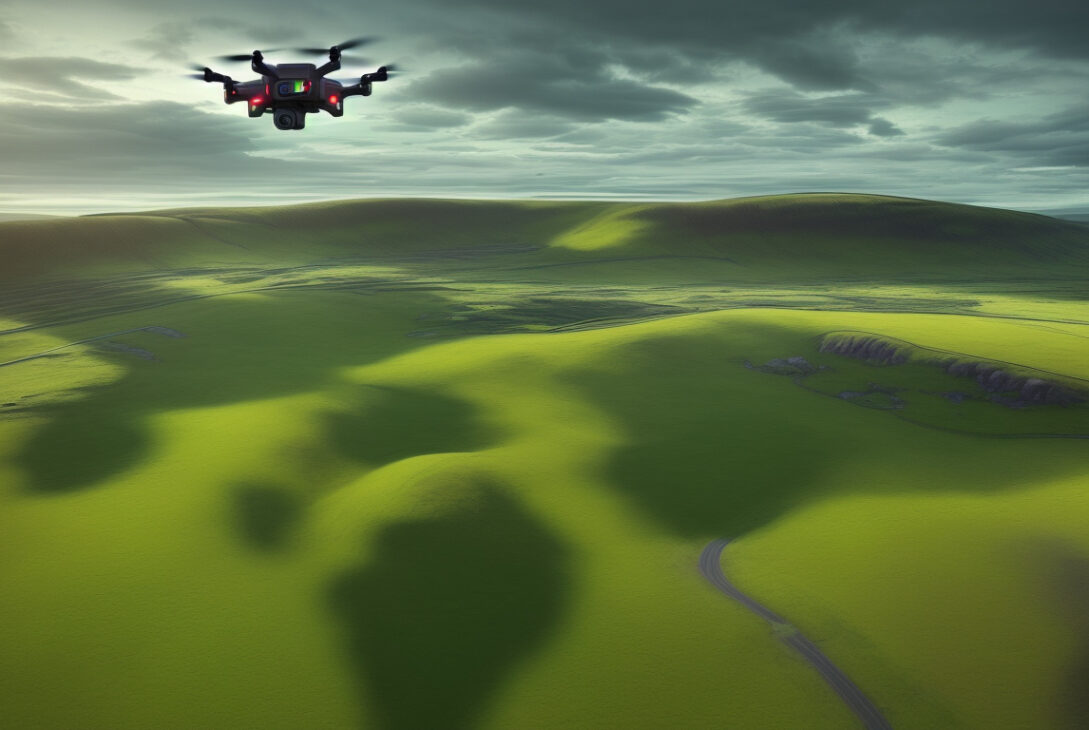
Ireland to Invest Up to €17 Million in Advanced Drone Tracking and Interception Technology
Government accelerates plans to bolster national security ahead of EU presidency
The Irish Government is set to allocate between €15 million and €17 million next year to fund an accelerated programme aimed at acquiring cutting-edge technology to track and intercept drones, marking a significant step in enhancing the country’s defence capabilities.
This investment represents the initial phase of a broader military radar initiative, anticipated to become the largest and most costly defence project in Irish history. Under the revised National Development Plan, the Government is preparing to sanction up to €1.7 billion for defence equipment and infrastructure by 2030, with approximately €300 million expected to be available in 2026 alone.
A Strategic Response to Emerging Security Threats
The push for improved drone defence technology follows a recent incident during the visit of Ukrainian President Volodymyr Zelenskiy, when drones flew near Irish airspace, reportedly aiming to embarrass the Republic and expose vulnerabilities in national defences. The drones were detected approximately 13 nautical miles off the coast as President Zelenskiy’s flight approached Dublin Airport. Footage of the event was captured by the crew of the Naval Service’s LE William Butler Yeats, which was part of the security operation at the time.
The Gardaí’s Special Detective Unit, alongside the Defence Forces’ Irish Military Intelligence Service, is leading an ongoing investigation into the drone incident, working in close collaboration with international law enforcement and military partners. The inquiry focuses on identifying the origin of the drones and those responsible for deploying them.
Enhancing National Security Infrastructure
The defence capital investment plan prioritises the deployment of a counter unmanned aerial systems (C-UAS) battery at Baldonnel Airbase in west Dublin. This location is strategically important, particularly as Ireland prepares to host a heightened number of foreign leaders and politicians during its EU presidency in the latter half of 2026. Minister for Defence Helen McEntee is expected to present further details to Cabinet regarding the defence sectoral capital plan, which extends beyond drone defence. The plan includes substantial investments in underwater sonar technology—known as subsea domain awareness—to safeguard critical maritime infrastructure such as cables and pipelines.
Additional acquisitions slated for the Defence Forces consist of new light and medium helicopters for the Air Corps, replacement of the existing fleet of eight PC-9M turboprop trainer aircraft, new armoured personnel carriers, and upgraded night vision equipment for the Army.
Clearer Protocols and Regional Cooperation
Security officials emphasise the urgent need for clear protocols when rogue drones are detected, especially considering the upcoming EU presidency. The recent drone activity has spotlighted gaps in current defence measures, including the cautious approach taken by the Naval Service, which refrained from shooting at the drones due to concerns over the safety of nearby civilian aircraft operating in the approach corridor to Dublin Airport.
Ireland’s commitment to enhancing drone defence follows examples set by European neighbours. During the Danish presidency of the EU, nations such as France and Germany deployed counter-drone teams—and even a German anti-aircraft vessel—to Copenhagen in response to heightened drone threats attributed to Russian actors.
Looking Ahead
The military radar system, anchored by the drone tracking and interception technology, is the cornerstone of Ireland’s defence capital priorities from 2026 through 2030. The Government aims to have the entire system operational by 2028, reinforcing the country’s readiness to confront evolving security challenges both domestically and within the broader European context.
As Ireland moves forward with these critical defence enhancements, the collaboration between national security agencies, military branches, and international partners will be pivotal in safeguarding the nation’s airspace and infrastructure during a period of increased geopolitical uncertainty.
Key Facts at a Glance:
- Estimated spend on drone tracking and interception technology: €15–17 million in 2026
- Total defence investment planned by 2030: Up to €1.7 billion
- Key locations: Baldonnel Airbase for drone defence deployment
- Related equipment investments: Underwater sonar, new helicopters, aircraft fleet replacement, armoured vehicles, night vision gear
- Incident prompting action: Drone activity during Ukrainian President Zelenskiy’s Ireland visit
- Agencies involved: Garda Special Detective Unit, Defence Forces, Naval Service, Irish Military Intelligence Service
- EU presidency considerations: Heightened security demands in mid to late 2026
For ongoing updates on this evolving story and other national security news, stay connected with The Irish Times.