

Chip Company Planned to Transfer Technology to China, Former CEO Claims
By Mara Hvistendahl and Joy Dong
December 10, 2025
The former chief executive of Nexperia, a Dutch semiconductor manufacturer, has revealed that the company’s Chinese owner had intentions to relocate critical technology and research to China shortly after acquiring the firm in 2019. This disclosure sheds new light on longstanding concerns surrounding international tech transfers amid growing geopolitical tensions.
A Strategic Move Amid China’s Semiconductor Ambitions
Nexperia, known for producing essential chips used in automobiles and household appliances, was purchased in 2019 by Wingtech, a Chinese technology company partly funded by the Chinese government. According to Frans Scheper, Nexperia’s former CEO, Wingtech’s controlling shareholder, Zhang Xuezheng, initiated plans to transfer the company’s technological know-how and intellectual property to China immediately after the takeover.
This strategic effort was part of China’s broader push to enhance its capabilities in semiconductor manufacturing — a critical sector for modern technology and national security. The move, while significant, went largely unnoticed and unchallenged by officials for several years.
Dutch Government Seizes Nexperia Amid Rising Concerns
In a rare and decisive intervention, Dutch authorities seized control of Nexperia in September 2025 to prevent the transfer of sensitive technology out of Europe. The government cited national security concerns, highlighting risks related to Wingtech’s affiliation with Chinese government funding.
This seizure reverberated through the global automotive industry, raising alarms about the security and stability of critical supply chains. The incident has become emblematic of wider geopolitical conflicts involving technology control, with the Netherlands positioned at the nexus of competing interests between Washington and Beijing.
Early Awareness of Risks
Scheper’s account, which had not been made public until now, provides an unprecedented glimpse into the timeline of when Dutch officials became aware of the potential threat posed by Wingtech’s acquisition. It appears that from the outset, there were clear indications that the new ownership planned to appropriate valuable intellectual property and shift it to China.
This revelation underscores the challenges Western countries face in balancing open investment policies with safeguarding technologies vital to their economies and security infrastructures.
Broader Geopolitical Implications
The Nexperia case has ignited broader discussion about how Chinese acquisitions of foreign technology firms can evolve into national security issues, sometimes years after the initial purchase. It exemplifies the growing caution in Europe and the United States regarding Chinese investments in critical industries, particularly semiconductors, which are foundational to modern electronics.
With tensions escalating between the U.S. and China over technological supremacy, the Netherlands’ intervention represents a key moment in the ongoing struggle over who controls critical chip-making technologies.
Looking Forward
As global powers vie for dominance in semiconductor technology, the Nexperia episode highlights the intricate challenges governments face in monitoring and regulating foreign acquisitions. It also raises questions about future policies to protect strategic industries while fostering international business.
Authorities and industry stakeholders continue to watch developments closely, aware that how such cases are handled will shape the landscape of global technology and security for years to come.
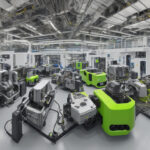
Photo Caption: A production line at Nexperia’s semiconductor facility in Hamburg, Germany, in 2024. The Dutch government seized the company in September 2025 amid concerns over technology transfer. (Fabian Bimmer/Reuters)
For further updates on this developing story, stay tuned to The New York Times.