

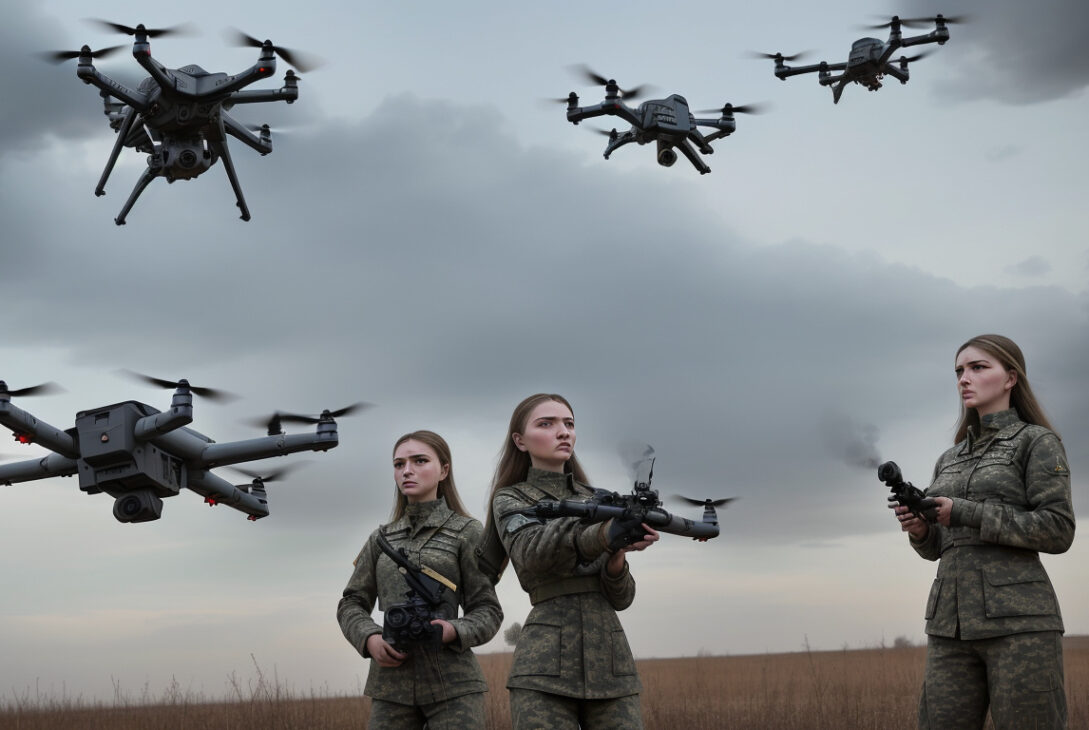
Ukrainian Women Embrace Combat Roles as Technology Reshapes the Battlefield
Kharkiv, Ukraine — Nearly four years into Russia’s full-scale invasion, Ukrainian women are increasingly stepping into combat roles, a shift fueled by technological advancements that are transforming modern warfare. This trend highlights the evolving face of Ukraine’s military as it adapts to the demands of a high-tech battlefield and an ongoing conflict.
One poignant example is Monka, a 26-year-old soldier who originally struggled to find a combat role when the war began. After leaving a restaurant management job abroad, she returned to Ukraine and joined the military last year as a pilot of short-range first-person view (FPV) drones. Monka serves in the Unmanned Systems Battalion of the Third Army Corps and calls the ability to deliver ammunition and strike targets remotely “incredible.”
“The fact that technology lets us deliver ammunition without carrying it in our hands or running it to the front line — that’s incredible,” Monka said, speaking under her call sign in line with military protocol.
Recent statistics from Ukraine’s Defense Ministry reveal a 20% increase in women serving in the military compared to 2022, with over 70,000 women enlisted in 2025, including more than 5,500 deployed directly on the front lines. Some military units have actively tailored recruitment campaigns to attract women, reflecting the country’s commitment to expanding and strengthening its armed forces despite ongoing peace negotiations that could limit future military size.
In Kyiv and beyond, military and political leaders underscore the army as a key security guarantee against Russian aggression. “We need everyone — engineers, pilots, IT specialists, programmers. It’s not about men or women. We need people who are ready to work hard,” Monka emphasized.
Technology Opens Doors for Women in Combat
Drone piloting has become one of the most popular combat professions among women in Ukraine’s military. Imla, 27, who joined the Kraken 1654 unit, shifted from a professional hockey career to military service. Initially set on becoming a combat paramedic, she soon discovered drone operation, starting with small reconnaissance drones before progressing to larger models equipped with bombs.
“I clearly remember my first drone flight,” said Imla. “I was so nervous my hands wouldn’t stop shaking. To be honest, I even wanted to cry in some moments. But then, over time, you build up experience and start feeling confident.”
The Khartiia Brigade, for instance, has seen a 20% increase in female recruits since 2024. About six months ago, they launched a recruitment campaign aimed at women for both combat and technological roles in partnership with the Dignitas Foundation, a charity supporting Ukraine through technological and civic innovation projects.
“In recent months, dozens of women have joined us in combat roles and are working successfully,” said Volodymyr Dehtyarov, public affairs officer for the Khartiia Corps. “The more technology we have, like drones, the more historically male professions open up.”
The unit has also initiated training for officers and commanders on leading mixed teams with diversity of age, gender, and background — a move intended to enhance leadership effectiveness.
Challenges and Persistence
Despite progress, women in the Ukrainian military still face obstacles and ingrained conservatism. Yaha, 25, joined in 2023 and began as an army clerk. Although eager to attend drone training, she was initially met with resistance and advised to take on the role of a cook instead.
“It was unpleasant because I didn’t expect such uncomfortable conditions, such strict limitations,” Yaha recalled. Determined, she spent her free time studying drone manuals and practicing on simulators. Eventually, she qualified as a bomber-drone pilot in the 9th Brigade. “War is not cool or glamorous. It’s pain, suffering and loss. You just do it because you want to change the situation,” she said.
Similarly, Chibi, a 20-year-old FPV technician with the Khartiia Brigade, recounted initial skepticism from some soldiers doubting her technical skills. However, with support from a fellow soldier, she pursued drone technology, which she finds more engaging than piloting.
“There needs to be more women in the army,” said Chibi, whose hair is dyed pink and dark blue. “The more women there are, the better the attitude toward them will be.”
The Critical Role of Women in Ukraine’s Unmanned Systems
Olha Meloshyna, spokesperson for Ukraine’s Unmanned Systems Forces, emphasizes that drone operations are far from safe. Russian forces actively target drone operators, highlighting the inherent risks involved. Nonetheless, more women are entering tech-forward roles, including drone operation, repair, and electronic warfare — all central to Ukraine’s striking and reconnaissance capabilities.
Currently, women make up about 4.2% of the Unmanned Systems Forces. “This is significant because women enlist voluntarily,” Meloshyna noted. “In terms of gender acceptance, we have never had division. What matters is desire and motivation.”
The unit plans to expand recruitment, aiming to add 15,000 new personnel, with women increasingly applying for both combat and noncombat positions.
“The Unmanned Systems Forces are a system made up of people — men and women. No drone is autonomous. It needs human involvement. And the more personnel we have, the more drones will fly toward Russia,” Meloshyna said.
As technology continues to redefine warfare, Ukrainian women are proving integral to the country’s defense, charting new paths on the front lines and helping shape the future of military combat.