

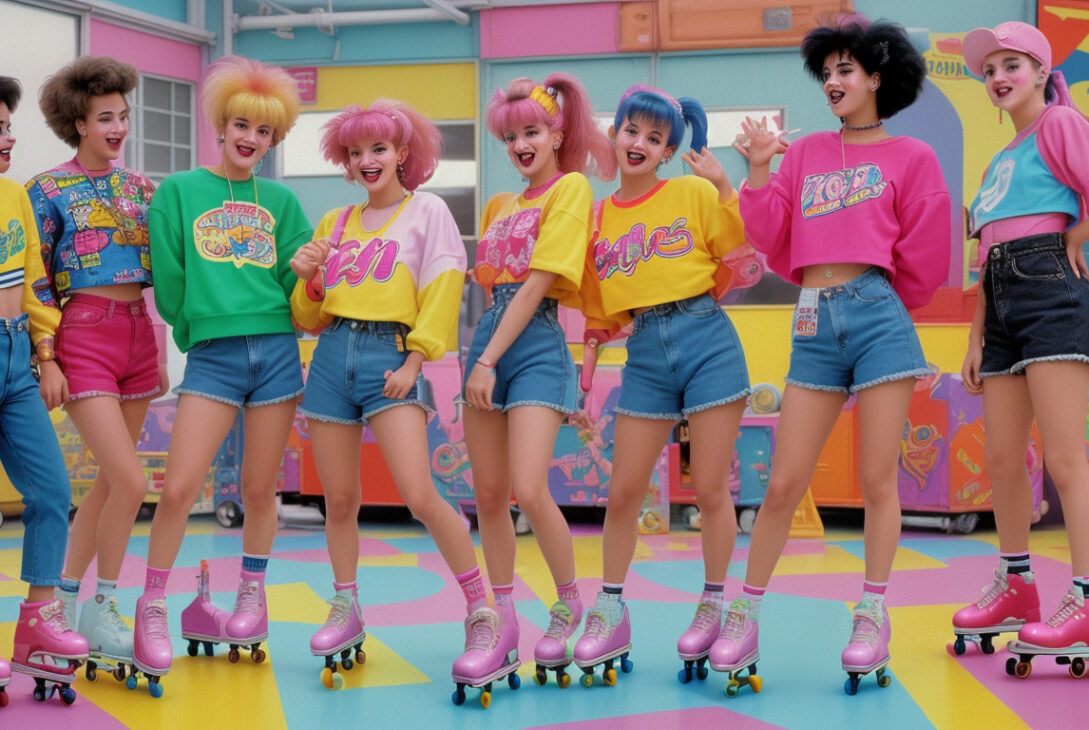
Generation Z’s Nostalgic Longing for the 1990s: A Desire for a Pre-Digital Era
In an era dominated by smartphones, social media, and perpetual connectivity, Generation Z—a cohort born roughly between 1997 and 2012—is exhibiting a growing fascination with the 1990s, a time before digital technology had an overwhelming grip on everyday life. This yearning for an earlier, seemingly simpler era is not just a cultural fad but reflects deeper social, psychological, and political dimensions.
Looking Back Instead of Forward
Emily Segal, author of Mercury Retrograde and a prominent trend forecaster, compares Gen Z’s preoccupation with the past to a scene in Dante’s Inferno where condemned souls are doomed to look backward. She suggests that young people today are less future-focused and more immersed in a world saturated with cultural revivals. From vinyl records and Polaroid cameras to VHS tapes and vintage fashion, much of what Gen Z consumes is a reimagining of the late 20th century. “Everything new feels familiar,” Segal observes, highlighting a culture dominated by nostalgic remakes rather than groundbreaking innovation.
Philosopher Mark Fisher diagnosed this trend over a decade ago with his concept of “The Slow Cancellation of the Future,” describing a cultural landscape where new creative forms give way to endless recycling of the past. Segal echoes this, stating that the “zombie-like” cultural forms Fisher identified still persist, emphasizing a stagnation in forward momentum.
Nostalgia Beyond Personal Memory
Psychologist Clay Routledge, who studied nostalgia extensively in his book Past Forward: How Nostalgia Can Help You Live a More Meaningful Life, has discovered that Gen Z’s nostalgia is unique. Unlike previous generations, these young people are not nostalgic for moments they personally experienced but for a historical era before their time—especially the period just before the digital age took hold. Surveys indicate that 60% of Gen Z wishes to return to a time before the ubiquity of connectivity, 68% feel nostalgic for periods before their birth, and 78% want present technology to incorporate stylistic elements from the past.
Routledge explains this as an ambivalent relationship with technology: while young people appreciate digital benefits, they also express worry about its social and personal consequences. This ambivalence is fueling a desire to reconnect with a pre-digital world where social interactions were face-to-face and life felt less mediated by screens.
Evoking the 1990s: Viral Videos and Social Movements
This nostalgia is vividly illustrated through viral content depicting 1990s teenagers in environments absent of cell phones, such as high school hallways. These videos capture moments of spontaneous conversation and social interaction without digital interruptions, captivating young viewers who lament that their own experiences are far removed from such unmediated connectivity.
In response, various movements within Gen Z embrace “digital detox” initiatives, “offline” parties that prohibit cell phones, and a resurgence of “dumbphones” like basic Nokia models. These reflect an active effort to counteract the dominance of the digital world. Prominent voices like TikTok philosopher Leo Espluga advocate for disconnecting from technology to reclaim mental energy and time, encouraging walks without Google Maps and reduced reliance on constant online engagement.
Nostalgia’s Dual Edge: Inspiration and Risk
Philosopher Diego Garrocho notes that feeling out of step with one’s era through nostalgia can open pathways for change or risk devolving into mythical idealization of the past. This duality is evident in Generation Z’s evolving politics and cultural guardianship.
Recent studies point to a conservative tilt among young men in Gen Z, with increasing skepticism toward gender equality advances and democratic institutions. A notable 60% of young men surveyed across 31 countries believe gender equality has “gone too far,” and in the United States, only 36% trust democracy to address pressing societal problems. Political analysts, such as Spain’s Mario Ríos, argue that youthful nostalgia often aligns with reactionary impulses, as right-wing groups exploit longing for a purportedly better past.
Yet, nostalgia need not imply regressiveness. Routledge stresses that when harnessed constructively, nostalgia can be a catalyst for creativity and renewal, helping young people adapt to the present by reinterpreting valued elements of history. Garrocho echoes this viewpoint, suggesting that mythologized pasts serve as founding myths that energize societies to pursue excellence and better futures.
Conclusion
Generation Z’s fascination with the 1990s is far more than a trend in fashion or entertainment. It reflects a collective desire to reconnect with a world less dominated by digital surveillance, instant gratification, and social media pressures. While this nostalgia carries the risk of forgetting present challenges or glamorizing selective history, it also holds the potential to inspire fresh perspectives and meaningful cultural transformations. As these young people navigate unprecedented societal complexity, their backward glance may illuminate new directions for the future.
This analysis was compiled based on reporting by Daniel Soufi for EL PAÍS English, highlighting insights from cultural experts, psychologists, and political analysts on Generation Z’s nostalgic turn toward the 1990s.